fun fact M’baku mentions that the Jabari tribe worship Hanuman, the Hindu god. The monkey link is obviously there, but it’s also a nice shout-out to the strong Indo-East African cultural transference that has taken place for centuries, and shows that despite the insular nature of Wakanda specifically, Indian customs and traditions and religion have still found their way in. The Jabari’s vegetarianism is also likely influenced by Indian/Hindu tradition. My Indian dad, who was born and raised in Kenya and has Swahili woven into the Punjabi he passed down to us, loved the film. Wakanda forever!!
Before we begin, I think it’s important to unpack what this comparison really means and who is actually being compared. No one is saying that Padmé, a woman of high ideals and deep convictions, who believes in the power of ideas, words, and compromise and who holds democracy as sacred, is very much like the taciturn, cynical henchwoman to a despot, whose entire life has been shaped by the power she is all too aware does not have. And no one is comparing emotionally tortured, perpetually uncertain Zuko to Padmé either. Nor is anybody comparing carefully controlled and seemingly unemotional Mai to Anakin Skywalker (though I will get back to this one later). No, the two characters actually being compared are Anakin and Zuko. As for why comparing Anakin to Zuko is painfully inaccurate, buckle up folks, I have visual aids.
I don’t see how people can make this comparison, Padmé and Anakin were torn apart by Anakin’s fall to the dark side and Padmé was unable to stop him. This was no fault of her own, though I do side-eye her covering up his mass murder–not because any of Anakin’s actions at any point were her fault but because it was something she herself did wrong.
Mai and Zuko on the other hand were ultimately brought together happily because they both did what was right and had the courage to break free of Ozai’s and Azula’s abuse, where Anakin was lured deeper and deeper into Palpatine’s manipulation and ended up abusing Padmé as well.
So I can see them as mirror images/happier reincarnations, but they’re obviously not straight parallels.
I don’t understand how you can see Killmonger disrespect culture, attack women, basically was trained by military to tear down civilizations, his own father says he is disappointed in what he’s done, move to arm black people outside of Wakanda with high tech weapons (yes cuz giving Leroy and em cannon blasters is gonna help the cause) and y’all still fix ya lips to say he was right lol when Nakia exists. Wild.
I was waiting for someone to say this.
There’s a reason he was the villain. He killed his girlfriend in cold blood. His anger was understandable, true, but his methods abhorrent and destructive. The end result would have been huge amounts of death and chaos. No positive outcome.
[Killmonger was an amazingly written villain and a great, if not perfect, example of how to execute a “tragic backstory villain arc”. Due to his characters anger and Michael’s incredible acting it made Killmonger a character a large amount of people could empathize with. An amazing villain. Truly.]
Nakia LITERALLY was team “let’s stop having Wakanda be an isolationist nation and help the worlds oppressed” from the jump and she doesn’t get enough credit.
Ok seriously we’re not appreciating M’Baku enough?? Boy challenged T’challa, lost, accepted it and left. Then like 3 days later the king washed up on his shore and he’s like “aye I could use this to become king but nah let’s save the guy until he gets better” so now he has an unconscious, barely-clinging-to-life king in his living room, but he does everything to save him. Then the servants of that king show up, offer him the throne and the Black Panther serum which would pretty much make him invincible, and what does he do? Does he go “Mhm ok niiice” and accept it, thus becoming rightful king? Nope! He shows them the dying T’challa, who they bring back to life with the serum and leave. They ask for his army, but he doesn’t want to risk his people, but in the end realises they should stick together so he barges into the battle like the fucking Icon™ he is ok I just love M’Baku let’s give him the appreciation he deserves
Umm Zuko is FAR from the only source on Azula being abusive to those around her. If these fans you mention are talking about the flashback scenes in “Zuko Alone” being Zuko’s memories, where’s this purported distortion from Zuko when Ty Lee was threatened into leaving the circus and joining Azula’s mission instead? When Mai was forced to choose between getting her brother back and obeying Azula? Zuko was not the viewpoint character in these scenes, and was nowhere near these events in fact.
I don’t subscribe to the idea that Azula is a one dimensional character or some poorly defined and often ableist stereotype of a “psychopath.” She was herself abused by Ozai and has a complex psychological profile. She was also controlling and hurtful to the people closest to her in a maladaptive attempt to deal with the abuse. (For the best discussion on this, see @attackfish ’s Three Pillars Theory of Azula).
Azula is brilliant, badass, inpiring and funny. She is, in her way, a patriot. She is a daughter and a sister. She is a whole person with history, traumas, relationships, and life. And yes, she is an abuser. She is not a one-dimensional caricature–she is frequently sympathetic and has many redeeming characteristics, including the possibility, if slim, to change. That’s the way abusers often are in life. None of her human qualities makes her actions less bad, because it’s real human beings, fully realized people who you might love and have complex feelings for, who do evil things.
“She did evil things” and “She is a three-dimensional person” are not mutually exclusive statements. I struggled my entire life to reconcile these statements and I will always speak against the harmful idea that the two are mutually exclusive. We can recognize an abuser’s humanity and her evil at the same time, and we have to.
On my second viewing, I definitely caught a hint of his expansionist leanings early on when he just casually told T’Challa he and the Border Tribe would be happy to “clean up” outside if T’Challa ordered it. I think he’s seen a lot of things at the border, interacting with the outside world, and he’s come to see preemptive Wakandan intervention as the answer to both outside threats and outside disorder.
He probably faced a lot of condescension from the outside world, too, as the contrived face of a “poor” nation, and may well have been burning at the indignities he got from people who didn’t have a tenth of his power. I didn’t get the sense he shared in Erik’s rhetoric of racial justice, but rather found it suited his own vision for Wakanda’s future.
What’s more, I think Erik’s actions for the first half of the movie, helping and then rescuing Klaue to make T’Challa look weak and then turning on Klaue to take his corpse to the border, were entirely about turning W’Kabi to his side and convincing him that Erik would be the better king. The wily bastard’s been trained for this sort of thing, after all, exploiting and worsening internal dissensions to take over. W’Kabi was a pawn but a willing one, and I find his worldview and decisions fascinating from even the brief hints in the movie.
Great analysis; also I think it was hinted that W’Kabi’s loyalty does ultimately lie with T’Challa’s Wakanda.
When he looked out over the battlefield, those soldiers fighting their own brethren seemed like a definite callback to the tribal warfare of pre-monarchical Wakanda–something that every Wakandan would have been taught to see as part of a grim, chaotic past. And Erik had brought that same strife back within a week of becoming king.
If W’Kabi had not been horrified by what he’d done and called off his forces, they may even have won against the Dora and Jibari–had he truly believed in Erik’s cause he would have let Okoye kill him as collateral damage. All in all, I think he can be redeemed more than Erik (wonderful & sympathetic villain though he was) and I hope to see more of W’Kabi in future.
I think it’s also worth considering that W’Kabi didn’t bring up Killmonger’s ring until Ramonda straight up called him a liar and denied there was any possibility that he might be who he claimed to be. W’Kabi obviously had already heard Erik’s version of the story and was waiting to see how TChalla and the Queen Mother would react. It was a test, and once again T’Challa failed it: by refusing to acknowledge the truth and to explain his side of the story he made himself look guilty.
We knew that T’Challa had only just learned of Erik’s identity and past, that he and Ramonda and Shuri had nothing to do with what T’Chaka had done, but W’Kabi didn’t. To him, it just looked like the former king had assassinated his brother and abandoned his nephew, and now the rest of the royal family was scrambling to cover his crime.
Now that I think of it, this goes for Okoye and the rest of the tribal leaders too, and certainly helps explain why they would offer so little resistance, at least initially, to the idea of Killmonger dethroning T’Challa.
It hadn’t occurred to me but now that you point it out: you’re absolutely right, the film draws a clear parallel between the tribal warfare of the pre unification times and the present day civil war. And in the end all the tribes (including, for the first time in history, the Jabari) are unified once again under the Black Panther, symbolizing a new beginning for Wakanda and foreshadowing the revolutionary decision that T’Challa’s about to make.
These are excellent points! The movie was very much about T’Challa coming out of his father’s shadow and finding his own voice as king, and W’Kabi was one of the people who judged him and initially found him wanting. I personally hope W’Kabi will continue to have a role in Wakanda and even wins back T’Challa’s (and Okoye’s) trust. A country needs diverse voices after all, and W’Kabi had foresight enough to know early on that Wakanda needed to engage with the outside world–even if the form of emgagement was different from what T’Challa ultimately chose–and independent-minded enough not to follow a weak king who might have been complicit in assassination of his kin. Those are valuable qualities in a leader and it would be a shame for Wakanda to lose him.
Yeah, because elections are guaranteed such fine consequences and never backfire, right?
What you are too simple-minded to comprehend, troll, is that the Wakandan rules of succession have accountability built into them. You may have noticed that the tribes in T’Challa’s coronation declined to challenge because they were more or less satisfied with him. And if only one of them had challenged him, sure, the challenger would probably have lost. (Other than Nakia, because T’Challa would have frozen. Or just given up and given the throne to her, because that is how one does with Lupita and if he lays a finger on her in violence we’re all jumping him together.) But if it’s two of them? Three of them? All of them, when he doesn’t have the power of the Black Panther? If the royal successor doesn’t have the backing of the tribes, then the succession is a no-go.
The same is true of the royal claimants’ continuing right to challenge. If it turns out the king was a bad choice, the tribes can rally behind an alternative. Under normal circumstances a royal claimant won’t try unless they have the political backing to rule, because if not… then, well, what happened to Erik would happen to them. And that’s the last line of defense for Wakanda, that its people would rise up and fight against an unjust leader. What did Western democracies do to stop their governments from misusing their technology and military to become enslaving, colonizing powers? Oh yeah, Jack Schitt, that’s what!
1. Very good answer
2. Anon can go and choke, white people looove to condescendingly treat non-western cultures and traditions as “primitive” and “uncivilized” just because they’re too dumb to think about something other than themselves for longer than 2 seconds.
3. Not only does the Wakandan’s ritual to access the throne allows accountability, it is also meant to choose an adequate Black Panther. The ruler or Wakanda is also automatically granted the title of Black Panther (unless they became too old like T’chaka). The Black Panther is supposed to be a warrior powerful enough to protect the country. If it is thought that the Prince or Princess requesting the throne is not strong enough for that role, it’s also a valid reason to challenge them.
Also the tradition wasn’t completely respected and that’s why Erik managed to become king. Erik issued his challenge late. The time for a blood relative to issue a challenge had already passed. T’Challa didn’t have to accept Erik’s challenge at that time (because even if blood relatives were allowed to challenge the king at any time without any support from the tribes which I highly doubt is the case, they would still have needed time to prove that Erik was actually of the royal bloodline AND after that they would still need to confirm his Wakandan citizenship … not to mention the time it would take to accurately judge whether his association with Klaue -a criminal wanted in Wakanda for multiple murders- was legitimate because it could be seen as infiltration and espionnage or if he should be judged as an accomplice) but T’Challa still agreed to fight Erik and that was his mistake. Also someone living in Wakanda would have known when the challenge was usually meant to be issued and wouldn’t have contested T’Challa being king days after like Erik did. The second fight should never have happened in the first place and it wouldn’t have if the ritual had been completely respected. Which is the point of the ritual !
Notice how during the second fight there wasn’t nearly as many witnesses as when T’Challa and M’Baku fought ? That’s a good representation of the fact that this isn’t as legitimate as that time. Erik doesn’t have the backing of the people and to be honest ? Neither does T’Challa in that particular decision because he choose to fight Erik with his family in mind instead of his country. That’s why his people aren’t there to see this. He shouldn’t have risked Wakanda and he shouldn’t have made that decision without considering his people. His mistake is understandable under the circumstances with the revelations about his family and his grief and anger about the situation … but it was still his mistake because as a king his decision was binding (thankfully T’Challa decided that he had to fix his and his father’s mistake instead of just joining his ancestors because he knows when to admit he made a mistake and how to make up for it instead of persevering in his mistake, which is what make him a good king).
So basically ? Erik becoming king in Black Panther was not the fault of the ritual. Also anon is racist as fuck and should educate themselves on that instead of bothering people with their ignorant bullshit 🙂
Yeah, because elections are guaranteed such fine consequences and never backfire, right?
What you are too simple-minded to comprehend, troll, is that the Wakandan rules of succession have accountability built into them. You may have noticed that the tribes in T’Challa’s coronation declined to challenge because they were more or less satisfied with him. And if only one of them had challenged him, sure, the challenger would probably have lost. (Other than Nakia, because T’Challa would have frozen. Or just given up and given the throne to her, because that is how one does with Lupita and if he lays a finger on her in violence we’re all jumping him together.) But if it’s two of them? Three of them? All of them, when he doesn’t have the power of the Black Panther? If the royal successor doesn’t have the backing of the tribes, then the succession is a no-go.
The same is true of the royal claimants’ continuing right to challenge. If it turns out the king was a bad choice, the tribes can rally behind an alternative. Under normal circumstances a royal claimant won’t try unless they have the political backing to rule, because if not… then, well, what happened to Erik would happen to them. And that’s the last line of defense for Wakanda, that its people would rise up and fight against an unjust leader. What did Western democracies do to stop their governments from misusing their technology and military to become enslaving, colonizing powers? Oh yeah, Jack Schitt, that’s what!
1. Very good answer
2. Anon can go and choke, white people looove to condescendingly treat non-western cultures and traditions as “primitive” and “uncivilized” just because they’re too dumb to think about something other than themselves for longer than 2 seconds.
3. Not only does the Wakandan’s ritual to access the throne allows accountability, it is also meant to choose an adequate Black Panther. The ruler or Wakanda is also automatically granted the title of Black Panther (unless they became too old like T’chaka). The Black Panther is supposed to be a warrior powerful enough to protect the country. If it is thought that the Prince or Princess requesting the throne is not strong enough for that role, it’s also a valid reason to challenge them.
Thank you! And yes, exactly. The Black Panther is a Royal Who Actually Does Something, they have to prove they’re up to the job. The power is not a personal trait or entitlement, it is a mantle of office and a sacred trust. That’s why the royal successor or challenged incumbent is divested of the BP powers during the duel–because it doesn’t belong to them and they have to prove themselves worthy of it.
This is another way that the Black Panther presents a radically different view of superpower, not as something a person owns as an individual, but as a social promise and a heritage. By burning the heart-shaped herbs Erik imposed his own Western view of superpowers–as a resource to hoard to himself and deny to others–on Wakanda. This showed both his colonizer mindset and accentuated his unfitness to be king. This is the sort of shit Europeans have been doing for centuries, but that’s not barbaric? Destroying a cherished heritage and plundering resources?
okay, so everyone has set up the main rivalry in Black Panther as Killmonger vs T’Challa. And obviously that’s the main narrative structure of the story, not arguing with that. But I feel like from a purely character arc standpoint, the actual battle is Killmonger vs Nakia, and she obliterates him.
Erik Stevens is a CIA covert operative; basically, he’s a spy. So is Nakia. And when you look at their various actions through the lens of “who accomplished their mission better?”, it becomes pretty clear that Erik spent 20-some years preparing to destabilize T’Challa’s reign, including having inside knowledge and a birthright on his side…and Nakia spent roughly 36 hours successfully destabilizing his reign, in turn, with nothing but her incredible ability to network disparate resources.
Let’s just review her actions over those 36 hours okay:
– Gets the surviving members of the royal family successfully out of danger within seconds of the coup (aka the only living people with a competing blood claim to the throne aka the greatest threat to his regime)
– Sows enough doubt in the “greatest warrior in the country” about Killmonger’s ability to lead that when the time comes, Okoye and the entire Dora Milaje all defect (eventually saving hundreds of lives)
– Steals a heart-shaped herb from under his nose as he’s identifying it as the most important power resource in the country and trying to prevent it falling into anyone else’s hands, lol too late buddy
– Immediately identifies the person in the country with the best platform to mount a counter-insurgency (M’Baku), identifies what it will take to get him on their side, and casually resolves a centuries-long division in their country while she’s at it
– Correctly predicts Killmonger’s opening move of distributing vibranium to the war dogs, and assists in a comprehensive strategy that shuts it down cold–a strategy they wouldn’t have been able to use if she hadn’t gotten Shuri, Ross, and T’Challa all in one place with the right information at the right time
As soon as T’Challa is back she takes an immediate backseat again (she said it herself, she’s a spy, not the leader of an army), but, seriously, if you have to pinpoint the one person who took down Killmonger, it’s undeniably her. And she did it by clearly demonstrating that her skills as a war dog are miles ahead of his as a CIA agent (due in part, I’m sure, to being trained in a superior country, but also she’s Just That Good).
Yes! Erik’s real misfortune was coming up against a much better and smarter intelligence operative. She also gives the lie to the stereotypical spy narrative (embodied by Erik) that you have to be heartless and violent to achieve your ends. She is the moral center and touchstone of film, so filled with goodness it comes off her like a glow, but she kicks the ruthless Erik’s ass from Wakanda to Kinshasa.
Another thing Nakia was good at was identifying where the necessary resources weren’t, namely in herself. That was why she argued Ramonda out of the idea of taking it herself. It wasn’t self-effacement or modesty, it was a clear-eyed calculation of what it would take to win and the best chance was with M’Baku, not her.
And she did much of this while she thought the man she still loved was dead. She admits as much to Okoye, too. Think of how much sheer fortitude that took, to work through a grief like that to save your country. She is a hero and her heroism is no less amazing for not being flashy or center stage.
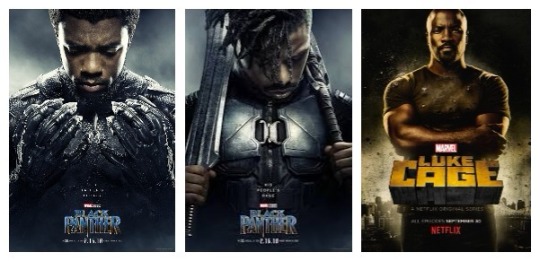
T’challa, Erik and Luke Cage, as characters, men, and representatives for their communities, represent such a wide breadth of the African Diaspora, and it’s really cool to see how that’s affected their characters, their worldviews, and their philosophies. But it’s also interesting to see the parallels that these three men, who’re each within varying stages of Diaspora, have.
Now, I’m no expert on African Diaspora, and there’s a lot that I’m still learning, but I’ve had these thoughts in my head since I left the theater after seeing Black Panther.
*Spoilers for Black Panther underneath*
T’challa
T’challa is a man who grew up on the African continent (Wakanda) so he’s never had to deal with any kind of diaspora. Whatever media he consumed (and I would assume Wakanda would have its own source of media and entertainment) was steeped in Wakandan tradition/culture/language. He never had to feel out of place in his own home country. And true, being heir to the throne of Wakanda probably warped his own sense of what Wakanda was, and gave him a more rosey-outlook on his home country, but for the most part, no one in Wakanda gave him any kind of grief for speaking Xhosa, or for having the name “T’challa” because he was “Home.” T’challa practicing his own cultural traditions was never looked down upon.
Erik Killmonger/N’Jadaka
Then we have Erik “Killmonger” Stevens, who, for all intents and purposes, is the son of an immigrant. Erik grew up with his father’s stories of Wakanda. His father, N’Jobu gave his son everything he needed to be Wakandan. Despite Erik being born in America, N’Jobu wanted his son to have some connection to his heritage. from teaching him the language, to even giving his son a Wakandan name (N’Jadaka). And yet, despite being Wakandan (of both Wakandan and royal blood) Erik is still seen as an outsider to both Wakandans (due to his American upbringing) and Americans (due to his skin color). Through the film, Erik cites the atrocities against Black people throughout the diaspora had suffered as the cause of his crusade. Erik is a man who grew up with fairy tales of another world that he should, by all rights, be able to take part in, but can’t. Erik is the product of two worlds and not being able to take part in either one leaves him frustrated and angry. Even at the end of Black Panther, at the time of his death, Erik says “Bury me in the ocean where my ancestors jumped from ships because they knew death was better than bondage.” He associates himself, his family and his heritage, with those who could not be considered “African” but also refused to assimilate. Erik exists as something in between these two identities.
Luke Cage
Now, unlike the two previous men, Luke Cage isn’t the son of an immigrant, and he never grew up in an African society. He is the descendant of American slaves, and in so doing he is so far removed from any kind of “Traditional African” culture that he probably doesn’t even realize it. African-Americans (or Black Americans who’re descended from slaves) grew up with no knowledge of their cultural roots, and any kind of tradition that was past down to us was done in a way that was hidden or weaved into a Eurocentric package. African Americans, for the most part, had to start from the ground up and create an new culture. And Luke Cage is aware of this. He has an extensive knowledge of African American history, and a deep pride in the advancements and achievements that African Americans have made. From music, to language (African American Vernacular English) to fashion, and politics. Luke carries all of those aspects of being African American with him, into every conflict and every challenge he faces. Unlike Erik, Luke never grew up with stories of Africa because he’s too far removed from that land (but not so far removed from it that he doesn’t still deal with antiblackness/mass incarceration/biases in law enforcement that Erik cited.
The past as the present
A people without the knowledge of their past history, origin and culture is like a tree without roots. -Marcus Garvey
Carter G Woodson wrote The Miseducation of the Negro, and is the man behind Negro History Week which would later become Black History Month. Woodson noted that American schools systems not only taught history through the lens of white superirity, it also made it seem as if Africa as a continent was devoid of any kind of history or culture. Black History Month was created so that African American children could learn that their fore bearers made large contributions to the United States, and to the world at large. Speaking from a personal standpoint, in the schools I attended, we never learned about the continent of Africa (not its history, religion, or mythology). Furthermore, American schools never teach about any other Black people across the diaspora. We don’t learn about the Haitian revolution, or the history of Afro-Brazilians, or the contributions of Black people to European art and literature, such as Alexander Dumas or Leopold Sedar Senghor. And the United States’ educational system runs with the narrative that for Black people life started in slavery, and ended with the civil rights movement. Luke Cage, being a man who grew up in America with no strong connection to his African roots outside of his African American heritage and upbringing, only really had African American history to hold onto when it came to searching for and understanding his identity. You can see within Marvel’s Luke Cage, how he calls attention famous African American figures (such as Jackie Robinson) how he reads great Black American authors such as Walter Mosely, and Donald Goines, and Nikki Giovanni. The music he listens to, Wu Tang, and Method Man, are all artifacts of the African American experience, and proof of their strength. When Luke Cage was imprisoned in Seagate and offered the position of gladiator and better treatment, he responds with:
“Slavery was always a good deal for the master.” Luke invokes a specific instance in his own history as a Black American to fortify himself against temptation.
This isn’t just limited to Luke Cage, all the major players in Marvel’s Luke Cage draw reference to Harlem’s great leaders, musicians and politicians as a way to chart a course for the future. From Cottonmouth to Mariah Dillard to Misty Knight and Henry “Pop” Hunter.
Now, Erik Killmonger, having gone through the same educational systems as Luke would probably not only recognize how limited the western world views African history and culture, but also realize how hypocritical those history lessons are.
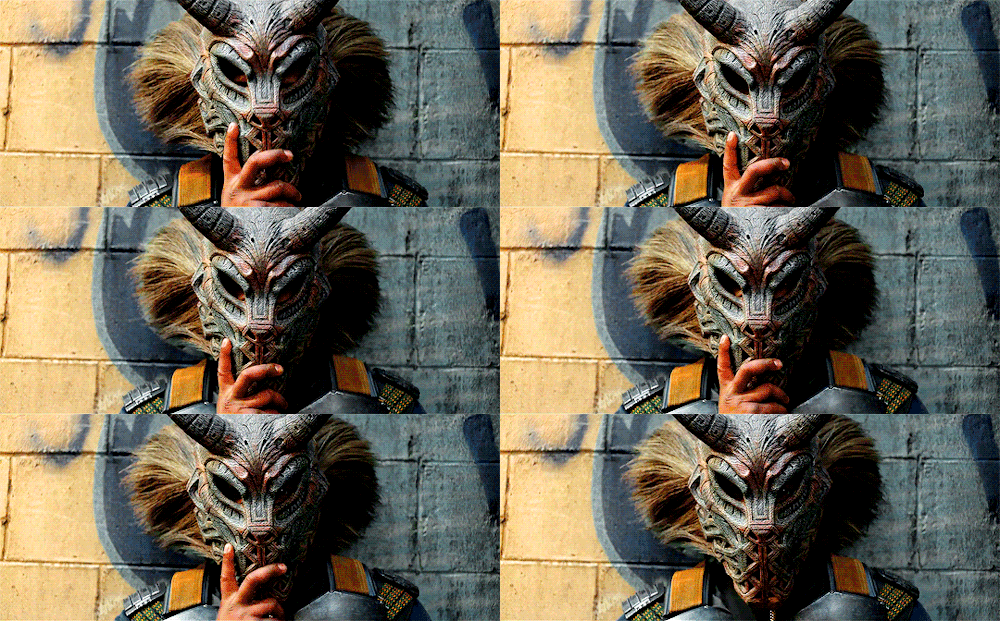
Take for example Killmonger’s reaction to being in the museum, looking at all of those artifacts. He not only chastises the “expert” on how white people obtained those treasures (”How you think ya’ll got them in the first place? Did you pay a fair price for them?”) But he also reclaims them for himself, and uses them for his own purposes and empowerment. He takes that antelope mask (because he’s “feelin’ it”) and wears it for his next heist.
Or how he scars his body to commemorate each kill he’s done which is an ancient African tradition called Scarification. And couple that with his knowledge of the Diaspora across the world (from how he cites atrocities and how Black revolutions never had the fire power enact real change). He uses both his knowledge of the African Diaspora, his training as an American, and his reclamation of African traditions as a means of gaining power and agency for himself. In these instances, Erik Killmonger acts as a bridge between two worlds.
The World Where the Ancestors Rest
In the film Get Out, one of the title songs, “Sikiliza Kwa Wahenga” which is Swahili for “Listen to the Ancestors”, What makes this song so jarring is that the singers are constantly trying to warn the listener (and Chris, the main character of Get Out) to run away to safety. They are trying to warn Chris in a language that he doesn’t understand because he is so far removed from that aspect of his culture. Feeling disconnected from your cultural roots is another part of diaspora. Chris can’t understand the danger he’s in because he can’t “Listen to the Ancestors”.
However, T’challa, Erik and Luke subvert this in their respective journeys. They “listen to the ancestors,” albeit in their own ways. They find wisdom in the past, and each man gains a different solution depending on who they invoke. Each man calls up, and takes wisdom from a different “Ancestors” that represents his own respective place within the diaspora.
T’challa connects with all the great leaders of the Panther clan, the kings of old, the ones who never had to question their identities or change themselves in order to assimilate. Erik claims those who jumped from slave ships and chose death over compromising their own identities. And Luke connects with the many African American trailblazers who created a new identity in spite of their country’s racial animosity.
When T’challa visits the ancestral plane for the first time, he is greeted by a beautiful purple sky and his father’s prideful smile. There is majesty in this space. A space when Kings come to gather. It’s not just the people T’challa calls on that is important, but the place where the exchange takes place.
Erik Killmonger (who is of the royal line as well) however is greeted with a different scene. Instead of being surrounded by Savannah, his “ancestral” plane consists of his childhood home, a rundown apartment in the poor neighborhood of Oakland California. While N’Jobu did everything he could to teach his son about Wakanda, and fill their living space with Wakanda/African art and culture, it was still a pale comparison to the real thing. In Erik’s astral plane, both son and father are banished from home, and are “lost”.
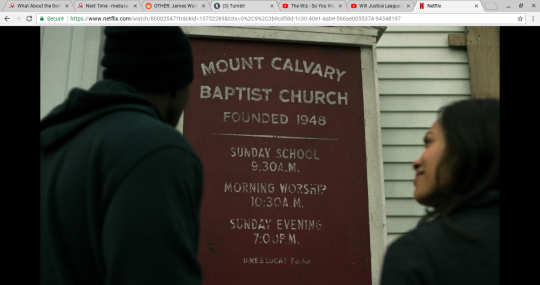
And while Luke Cage may not have ingested a heart-shaped herb, he too returns to the place of his ancestor. The church his grandfather founded, and the church his father ministered in. The venue for each man here is a reflection of where they are within their own diaspora. T’challa’s is traditional. It knows what it is and where it is. Erik’s is frustrated, rundown and exhausted, but still desperately clinging to its own culture. And Luke’s lacks any kind of majesty at all. It is without ceremony, or grand power, and is devoid of any “African” aesthetic, but it still boasts a strong and proud history founded upon African-American fortitude. And much like T’challa’s astral plane, Luke’s has a sense of identity and it knows who and what it is.
“When I Think of Home” -Dorothy, The Wiz
The place we live has the ability to shape us into the people we will become. There’s a reason we say “Home is where the heart is.” And the reason I used this quote from The Wiz is because the lyrics to the entire song are fitting to T’challa, Erik and Luke’s situations throughout their narratives. T’challa and Luke have learned to integrate themselves into their worlds. Luke has risen to become Harlem’s hero, and T’challa is the crowned king (through both blood and right). Erik’s situation, on the other hand, is very different. Erik acts as a man in between “homes.” Both Black Panther and Luke Cage did a phenomenal job of building up both character’s “homes”. And while Erik’s home of Oakland California did not get the same world building as Luke’s Harlem or T’challa’s Wakanda, its history, heritage, and influence is still evidenced through Erik and his actions.
Wakanda
“What happens here determines what happens to the rest of the world”
-T’challa
Wakanda has always had control of its own culture, its own destiny and its own identity. It has a culture that it is keen on protecting, even if it means turning its back on the rest of the world. Erik even knows of this lands wonder through the stories his father told him as a boy. And T’challa is the culmination of being brought up in this world. He is wise, he is strong, but he never allows his pride to control his actions. He is thoughtful and is averse to taking life when it can be avoided. However, through his film, he does deal with a crisis of conscious. He questions where Wakanda stands on international affairs, and what its responsibility is to the rest of the world. Both Nakia and Erik bring up Wakanda’s power, knowledge, and resources, and T’challa has to seriously consider what his role and his kingdom’s role is to the rest of the world. And then you have isolationist like W’Kabi who bring up the fear that Wakanda will lose its own identity and culture if it opens itself up to outside influence. Identity is an important part of Wakanda’s philosophy, and it’s clear that Wakandans pride themselves in holding onto who they are.
And later on in the movie, when he discovers his father’s hand in Erik Killmonger’s creation, T’challa experiences first hand the consequences of Wakanda turning its back on the rest of the world, and the rest of the diaspora. Erik Killmonger returns to Wakanda influenced by his upbringing in America, and actively destroys Wakandan culture (such as the heart shaped herb) and replaces Wakandan philosophies of peace and isolation with American philosophy of violence and destruction.
Oakland California
“Can you believe that? A kid from Oakland, running around believing in fairy tales.” -Erik Killmonger
Erik grew up in Oakland California in a run down neighborhood. One can infer that Erik and his father grew up in poverty, with gang violence running the streets. Oakland is also the place where The Black Panther Party was founded. A party that was concerned for the well-being of African American people and were responsible for radical movements that worked to benefit Black Americans, and protect them against exploitation by corrupt police. N’Jobu was also of the mindset that Wakanda could do more to help Black people all across the diaspora, and he came to this conclusion while living in Oakland, and he passed this ideology onto his son, just like he passed on the stories of Wakanda. In this way, father and son become products of the two cultures they are a part of. Adopting the philosophies of the political party that also bore the namesake of their country’s royal family, of their family. Erik was a kid during 1992, which means he probably saw the fallout of the Rodney King riots over in LA. A time where many Black Americans were dealing with the fall out of a bigoted, unfair policing system that exploited their lives and bodies with no consequence. It wouldn’t be difficult to believe the chaos he witnessed during those times, and how it contrasted with the stories of a beautiful, wealthy Wakanda that his father told him of.
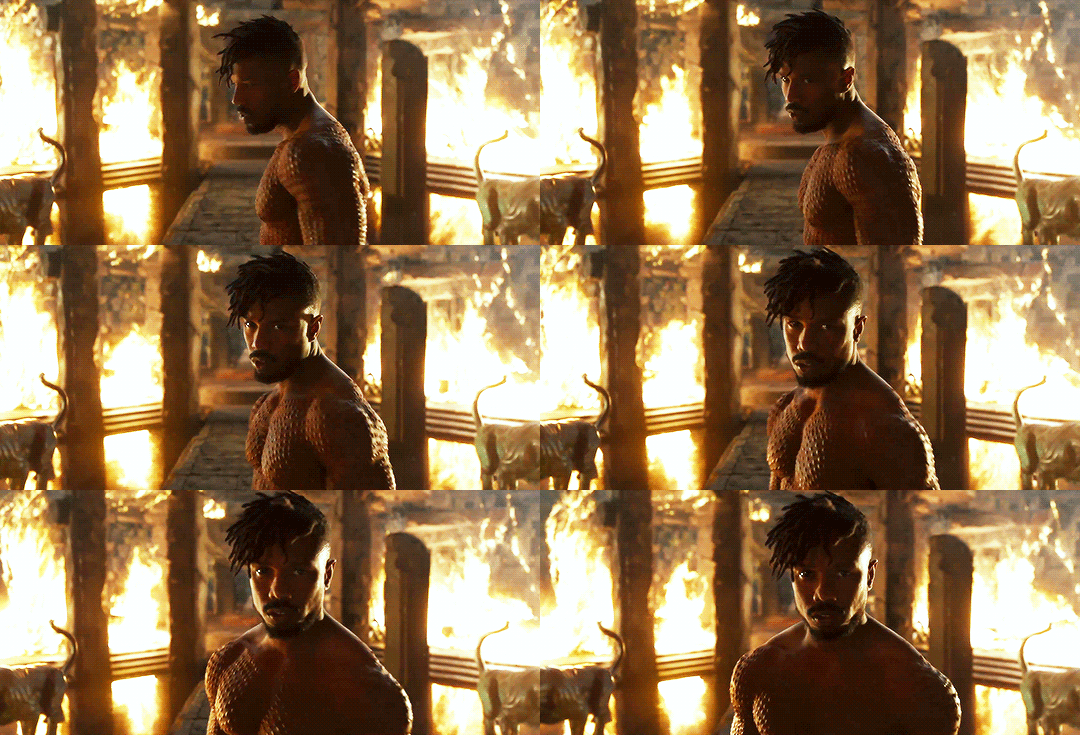
Erik comes from fire, he joined the military and, as he admits in Black Panther, killed. He killed in Iraq, in Europe, in Africa, in America. He comes from a place that was forged from flame. And during his time as king, Erik brings that same flame to Wakanda. By burning the Heartshaped Herb, ensuring that there can be no other ruler to oppose him. By taking Wakanda’s resources for his own agenda. He, through his own machinations, turns Wakanda into Oakland. Through Killmonger’s tenure as king, Wakanda undergoes an identity crisis where it doesn’t know what it wants to be. But is also through Erik’s time as king that the voices of the Diaspora are heard, and Wakanda is forced to recon with its own complacency.
Harlem
“[Harlem]…is supposed to be a shining light to the world.” -Luke Cage
Harlem is the main setting for Luke Cage, and is where the bulletproof hero calls his home. Harlem is a historic neighborhood for African Americans, being the birth place of some of the greatest works of art, literature and identity for African Americans. All throughout his show, Luke Cage (and many other characters) cite the importance of Harlem, the history of Harlem, and the future of Harlem. And while Luke loves his home and works to protect it (much like T’challa does for Wakanda) Luke Cage (at least in his Netflix series) isn’t a Harlem native. His home down is in Savannah, Georgia right where his grandfather built the church, and where his father used to minister. Luke Cage moved to Harlem as a way to escape the law and find a better life. His journey has many parallels to the Great Migration, a time when many African Americans migrated from the racist, segregated south to the north in search of a better life for themselves and their families. Like Erik, Luke has his heart and history in two different places. And like T’challa, Luke recognizes the importance of his home’s (of Harlem’s) identity and what it means to the rest of the world.
Conclusion:
Perhaps I’ve rambled on a bit too much with this post, but I don’t think I’ve ever seen such a well defined look at the African Diaspora so broadly. Especially in such an internationally recognized cinematic universe.
I really responded with how Luke Cage used and touched upon African American culture and history. And seeing T’challa and the whole nation of Wakanda opened a way of seeing the Diaspora that I never thought was possible. And Erik Killmonger works as the perfect median for both of these perspectives. While Luke Cage and T’challa have come to terms with their varying Diasporas, either though having it ripped away for generations (Luke Cage) or never having it taken in the first place (T’challa), Erik is still coming to grips with his, and his place within it.
Erik Killmonger, while struggling to come to terms with his cultural, and racial identity has, inadvertently, created a new one. Being Wakandan-American, which gives him a perspective that is unreachable to both T’challa and Luke, his place within the diaspora gives him access to the experience of creating to survive, holding onto what was old, while also forging something new in the process. And with this in mind, its ironic that Erik claims his ancestors as the “ones who jumped from the ship” those who are in the constant in between of two worlds. Those who never finished the journey through the middle passage and to America. In a way, there is strength to this identity, an uncompromising power that lives on, even in death.
However, each person goes on similar journeys throughout their respective narratives, and there’s a lot of crossover between their experiences. Whether it is leading their communities, gaining wisdom through a shared history, or simply learning to use the tools we have to make change. T’challa, Erik and Luke are each different sides of the same narrative pyramid, and it is such a wonderful treat to see them wrestle with their own ideas of how to navigate in a world where Blackness is often times looked down upon, or ignored. I think it would be really cool if we could get other perspectives in the MCU on the African Diaspora (such as Eric Brooks/Blade who is British, or Jericho Drumm/Doctor Voodoo who is Haitian).
Regardless, I’m glad that there are narratives that showcase both the difference and the parallels of the African Diaspora, and I hope these new programs can inspire people (of all Diasporas) to look at their roots. I know it’s been an inspiration to me.









 L.J.'s Obsessions