anti sjws: lol those ess jay woos get hash tag triggered by everything. have you tried not being a little bitch?
a 16yo: *goes by they/them pronouns*
anti sjws:
Was going to make an actual debate but I just found out op thinks grammar is a SOCIAL CONSTRUCT. LMAOOOOOOOOO op probably didn’t pass high school English anyway this is pointless
i dont know how to tell you this but language and grammar rules were made up by people
Non black folks: pay attention to this message. This man said nothing significant. But here’s what he did do…stay in his lane. Let’s say you know nothing about systemic anti-blackness/police brutality, the very least you can do is the above.
“It’s like Thor’s meeting his hero. He’s absolutely smitten by her, and because of her history being Valkyrie and all that. But she’s also this beautiful woman, so he’s kind of caught off guard. She could have him if she wanted. I think he hasn’t come up against that very often.” – Chris Hemsworth
This is an ultimate masterlist of many resources that could be helpful for writers. I apologize in advance for any not working links. Check out the ultimate writing resource masterlist here (x) and my “novel” tag here (x).
Fuckboy Deadpool stans: *identify with Deadpool as some sort of outlet of their insecure masculinity/heterosexuality and rebellion against “PC” culture*
Ryan Reynolds: *reaffirms Deadpool as pansexual literally every chance he gets, wants Deadpool to have a boyfriend in the film franchise, makes Deadpool act campy and effeminate as fuck in the movies, does a charity campaign for cancer where Deadpool dresses in pink and sits next to a pillow that literally says “feminist” on it, goes out of his way to hire a woman of color to portray the female lead in Deadpool 2, literally hires Celine Dion to write a Titanic-esque power ballad for the Deadpool 2 soundtrack and makes a music video where Deadpool prances around in high heels feeling his fantasy like the gayest gay that ever gayed*
Fuckboi Deadpool stans:
You gotta love Ryan Reynolds, because he truly was born to play this character.
He’s a canadian composed of snark. He basically is deadpool minus the tragic backstory
let’s be honest, Green Lantern was his tragic backstory
Rough animation of the Finn & Rey reunion hug I imagined would look like. What transpired in the movie had way, way, way more kick to the feels. Thank you, Rian Johnson.
(I took reference from an episode of the Legend of Korra [Season 3; The Ultimatum] This hug animation sequence was originally of Mako and Korra. hehe. 🙂 )
But don’t worry, most writers are and I’m here to help because reading them is making me cRAzY.
I’m writing this because I’ve read three otherwise great romance novels back to back featuring characters dealing with PTSD (or PTSD symptoms) and each one of them made the same dream mistakes. I honestly can’t think of a fiction book I’ve read that didn’t make these mistakes, so I thought I’d compile a handy dandy list of mistakes and how to fix them.
Lucky for you, I have PTSD and a ton of fellow veteran friends who deal with these symptoms.
*This is based on my experience and things told to me by friends. This is not to say that the below doesn’t happen in real life, only that it’s not as common as you might think.
The issue with these dreams is twofold: on one side is the psychological accuracy of the dream and on the other side is how you’re using the dream within the narrative.
Oh an Black Sails spoilers-ish ahead.
1) Stop writing the dream as a shot-by-shot accurate retelling of Traumatic Event.
Listen, not only do dreams seldom follow reality, but our own memories are tricky at best. I don’t remember getting beaten up because a) it was horrifying and we block stuff like that out and b) I was going in and out of consciousness. It would be pretty strange for me to dream something I don’t even fully remember. Our brains are simply not wired to do these vivid factually-accurate cinematic retellings.
My friend dreams things that did happen, but in his own words those dreams are always wrong in some noticeable or bizarre way. For instance, he’s getting chased through the streets of Iraq by a werewolf.
2) Dreams are informed by reality, not direct reflections of it.
It’s entirely likely my friend dreamt of a werewolf in Iraq because I got him binge watching Supernatural and the two ideas merged in his dreamstate. But see, that’s how dreams work.
The trauma event exists as a constant in his subconscious, but he has all this other information right there in his conscious mind all day, every day. In dreams, there isn’t a clear delineation between that information.
My dreams are often dependent on whatever I’ve fallen asleep watching on television. The themes are consistent, but not the content.
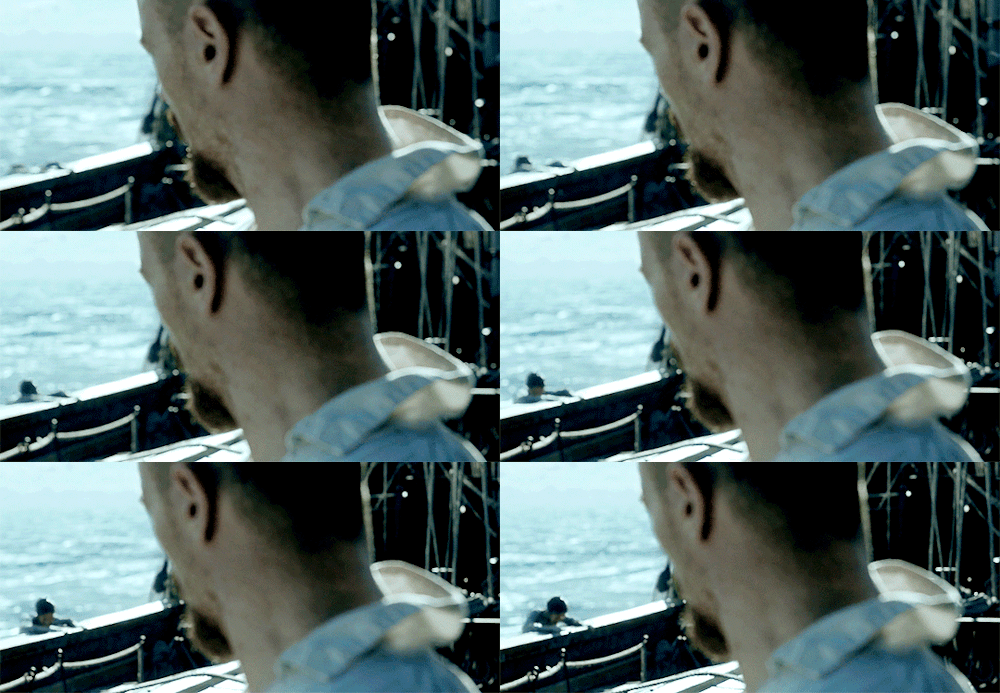
In Black Sails, Captain Flint’s trauma dreams feature his dead partner and friend following him around his empty ship. You have an element of the trauma (the animated corpse of his friend) + his daily existence (his ship). The two things intersect to form these unsettling nightmares as expressions of his fears and grief. He never once relives the event itself in his dreams as shown on screen.
Speaking of…
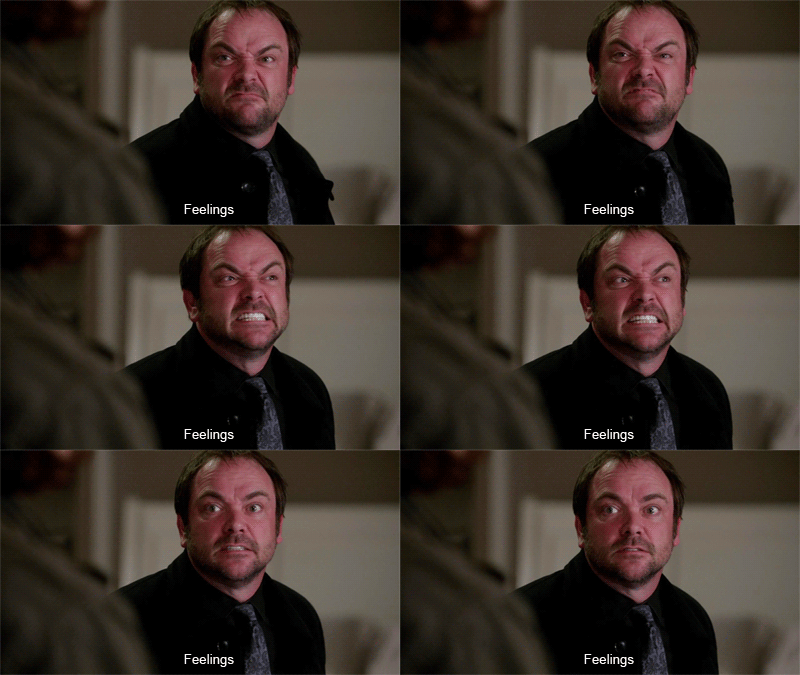
3) Trauma dreams often revolve around feelings, not necessarily the events themselves.
The PTSD package generally includes heaps of shame, guilt, anger and fear. As someone who survived a beating when I should have had control of the situation, my dreams tend to revolve around fear that people will know I’m a fraud or being unable to act in a dangerous situation.
Again, it’s entirely common for trauma victims to not remember large chunks (or the whole thing) of the trauma event. So why should their dreams be stunningly accurate? What we remember are feelings. Real strong feelings.
You cannot go wrong if you write your trauma dream around feelings, not a specific event.
4) If you present trauma dreams as expressions of themes, you can let go of the trauma dream as an exposition dump/way overused suspense trope.
You know you’ve read this: MC has dreams that are a shot-by-shot retelling of Traumatic Event that always cut off right before Traumatic Event, so that the Big Reveal must happen by a discovery later in the novel.
If I were the MC in a book, the easy and common thing would be to use the “dream sequence” as an expository retelling of Traumatic Event as a way to give some backstory to why I might be surly, mistrustful, afraid to try something new, whatever, and to clumsily shoehorn in suspense where there doesn’t need to be.
The much more interesting thing might be if my dreams were inconsistent in content but consistent in theme. In one I’m on an alien planet (because I fell asleep watching the Science Channel again) and the ground opens up and I fall into a pit from which I can’t escape because I am helpless. In another a man is watching me while I sleep where I am again frozen and helpless. This would force the reader to think: what is the recurring issue in these dreams? Why is it important? What is this telling me about this character and what happened to her?
It could be a personal preference, but I’d rather see the Traumatic Event either told in narrative flashbacks (not dreams) or verbally retold by the character in question. Let the dreams tell me something deeper about the character. It’s not that I was beat up, it’s that I feel like a failure because of it. One of these things is a shallow factual detail, the other tells you something about me as a person that I’m sharing with you, gentle reader, because talking about this stuff is healthy.
5) The Traumatic Event doesn’t have to be a big secret.
In Black Sails, we know what happened to Captain Flint’s partner. It happened in real time in the show. That didn’t make his uber disturbing dreams less disturbing or mysterious. Fans still debate exactly what the symbolism was and what they were telling us about James Flint in those moments. We do know from the dreams that he was disturbed, obsessed, and also monumentally guilty and blaming himself for what happened.
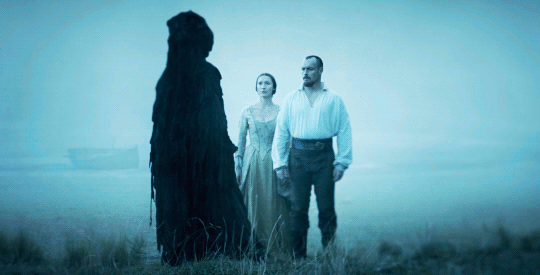
The mystery was perhaps more heightened by the fact that the dreams weren’t direct reflections of reality. We know who this person was, what she believed, and why she died. That Flint is imagining her screaming silently in his ear is horrifying and discordant with what we know to be factual. This adds emotional complexity to his character and the decisions he’s making while suffering these dreams.
^^^this didn’t happen. It was a dream. A real unsettling dream.
Once you let go of the concept of the trauma dream as a literal retelling and exposition dump, you have the entire dreamscape to work in other narrative elements, like symbolism, metaphor, foreshadowing, etc.


 L.J.'s Obsessions
