Show this photo to your daughters as they grow up.
Show them that courage is important, even in the scariest of situations. This woman stood up and faced her fears, spoke her truth in front of a group of men while balancing the world on her shoulders. She is a hero. She is a representation for all women who are done being assaulted and abused.
I Believe Dr. Christine Blasey Ford
Show it to them because our mothers didn’t show us this one:
Who is she? Anita Hill.
What’s she doing here? Testifying about the sexual misconduct of then supreme court nominee Clarence Thomas aka nowthe most senior justice on the Supreme Court.
Show this photo to your daughters as they grow up.
Show them that courage is important, even in the scariest of situations. This woman stood up and faced her fears, spoke her truth in front of a group of men while balancing the world on her shoulders. She is a hero. She is a representation for all women who are done being assaulted and abused.
I Believe Dr. Christine Blasey Ford
I believe her !
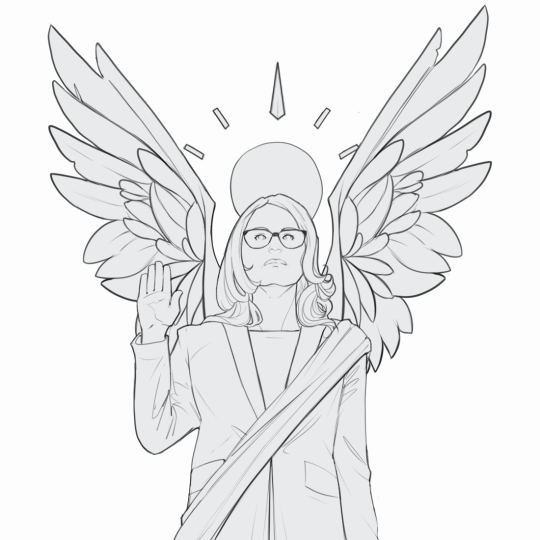
The clock behind her makes her look like an angel of justice.
Her mother Cheryl, 66, remains behind, a diminutive woman with dark hair pulled up in a bun. She chooses her words carefully. “It’s never left her. Every day, she lives it,” she says. “There were times when she would call me and his – he would be on a billboard or whatever, and she would just completely disintegrate. Having to walk into a store to get a pint of milk, and you’ve got his picture everywhere. (…) He’s the soccer god that everybody thinks is just perfect and flawless. (…) And she can’t even get out of bed some days.” Cheryl Mayorga shakes her head. “It’s just wrong. We’re behind her 100 percent.”
I believe Kathryn Mayorga. Do you?
I know this is scooting very close to the “omg why is no one reblogging this” territory, but the fact how little waves this is making in the football fandom is honestly terrifying to me.
People here make social justice issues out of every single thing, from bad interview quotes to that time someone thought Pulisic was dating a Trump supporter (he wasn’t) to “is it racist to say you don’t want your club to promote inhumane regimes overseas?”
But now one of if not the most famous player of this sport gets accused of rape and there is almost nothing. This story has been out for days. It’s not some vague, easily dismissed “he said she said” situation.
One of the leading investigative newspapers of Europe has published an article making very credible claims that accuse him of rape. At least 20 people were involved with the fact-checking over multiple weeks, according to Spiegel. The victim herself and multiple family members are quoted verbatim, Her story matches the results of a rape kit taken at the time (which is quoted in the article) as well as the original police report (which Spiegel also posted), filed one day after the assault, where she accuses a world famous athlete of raping her but doesn’t want to disclose his name because she was scared of the repercussions. Photos exist of her with Ronaldo from the day of the rape. A forensic psychiatrist’s evaluation is quoted that confirms she suffers from PTSD due to the rape.
Spiegel has, thanks to Football Leaks, papers proving that Ronaldo hired a team of “Reputation Specialists” that followed her and her family around in order to make her appear unstable and to dissuade her from pressing charges. Spiegel also has E-Mails from Ronaldo to his lawyer where freely admits she said “no” and told him to stop multiple times before and during the rape.
Honestly this is the clearest and best researched rape accusation that I have ever come across. And I see so many fangirls on here keep posting Ronaldo pics and ignoring this because it’s inconvient for them when it’s their fave.
He is white. Guaranteed he won’t be terminated from his job like he
should be & the female being groped has dark skin so she will be
seen In the wrong because of her skin color. This is sexual harassment on nation tv
people are disgusting
The fact a female is also justifying it, is horrible
Burn the whole globe
Aight so let another man grab him like this…I wanna see y’all justify his actions with the same “boys will be boys 🤷🏾♂️” energy
I swear if gay men treated straight men the way straight men treat women…then and only then, would y’all see the problem
On Thursday, Tina Brown confirmed to reporters that she had been approached to produce a redemption series, in which men outed by the #MeToo movement could attempt to rebuild their reputations.
According to gossip website Page Six, “Tina said she’d just been emailed about co-hosting a new show with Charlie Rose, in which they’d interview Louis C.K., Matt Lauer and others caught up in the #MeToo sexual harassment scandals.”
In a piece published on Women’s Agenda this week, writer Kristine Ziwica warns against the inevitable festival of comeback toursplanned by men recently disgraced by revelations from the #MeToo movement. From Louis C.K. to Matt Lauer and even Harvey Weinstein, it appears the wheels are already in motion to smoothly transition these men back into public life. After all, they only have all of human history from which to pick countless other examples of men and their reputations achieving full rehabilitation no matter what their crime.
An article in The Hollywood Reporter recently invited comedy club owners to speculate on (not if, but) when Louis C.K. will be able to return to the stage. In November last year, C.K. was finally forced to admit that long standing rumours of his sexual misconduct were true and that he had indulged in numerous acts of impropriety that included masturbating in front of (female) colleagues without their permission. Louis Faranda, executive producer at Caroline’s, said he would give C.K. a platform “tomorrow”, but predicts he’ll be back within a year, “making fun of his mistakes”. Comedian Sean Patton has a suggestion for how he can best do this: “He should do an hour special that breaks down why it was wrong and how he’s made amends.”
Isn’t it great to know that years of abuse and denial can be so easily overturned by a few well chosen words and the willingness of a disgraced person to “heal” publicly?
It depressed me to read C.K. fellow colleagues (most of them men) unconsciously collaborating to restore their friend’s former glory, but it certainly didn’t surprise me. As much as our society might like to claim it opposes men’s violence and misogyny, the reality is that the collective is at best largely indifferent to it and, at worst, angry that these things can be used to “tarnish” a man’s reputation.
Think of Brendan Fevola. In 2006, Fevola took a non-consensual shower photograph of then-lover Lara Bingle (who was 19 years old at the time) and sent it to his friends and teammates. The existence of the photograph came to light in 2010, when sources said the photo had spent the previous four years being shared across mobile phones in the football world. If Fevola suffered any damage to his reputation, it was short lived. A rehabilitative stint on Channel Ten’s I’m A Celebrity, Get Me Out Of Here! led to Fevola being employed as a presenter on Fox FM, where his contract was recently extended for another two years.
When I raise my concerns about the ease with which male celebrities recover from allegations or even convictions for abuse, I’m often met with a strange kind of territorial anger. Is he never allowed to work again?! people ask. How long does he have to suffer for his one mistake?!
Both questions, while easily answered, raise further questions of their own. First, of course men accused or convicted of sexual or physical assault should be allowed to earn a living. But why should that living automatically be in the same financially and socially lucrative fields they worked in before they made the choice to exert violence and power over another person? Why should this work include endorsement deals, celebrity platforms and influence? No-one deserves these things, especially not people who’ve actively caused harm to others.
Second, sexual assault and/or physical violence are not arbitrary “mistakes”. They’re choices that have wide-reaching consequences for their victims. Framing them as simple mistakes is how the behaviour of men in particular is massaged and excused to limit any negative impact they have on their lives.
Fame should not be used to insulate men from the consequences of their actions. And men accused of such misconduct shouldn’t be considered absolved of the gravity of their crimes just because they’ve spent a bit of time in the naughty corner.
As a society, we act as if one of the worst things we can do is ostracise men even when they’ve violated another human being. But if we want the legacy of #MeToo and the testimonies of victims of male violence to actually mean something, we have to be firmer in our treatment of the people who’ve inflicted this pain and suffering on them. If we stopped allowing men to get away with anything they like, maybe some of them would stop doing anything they wanted.
When our fetishization of redemption bleeds over into reality…
Throughout the seven seasons of Game of Thrones, audiences are shown a variety of gruesome sequences of violence and gore. Most of these are so fantastical that no audience members are likely to experience them in real life: being burned to death by a dragon, giving birth to a shadow monster, or having one’s head explode after a giant presses really hard on one’s eyeballs.
We feel sympathy or horror or discomfort watching these sequences played out in high definition on HBO in large part due to the wild unlikelihood that any of this could ever happen to us. Yet, the sexual assault that pervades the lives of the show’s female characters is not so far removed from the experiences of viewers.
According to recent statistics, roughly one in five women will suffer some sort of sexual assault. If it hasn’t happened to you, you almost certainly know someone to whom it has happened. This is not a new problem; people have been raped throughout all of human history, most often women victimized by men. George R.R. Martin has explained his frequent use of rape in his books as hewing to the vague concept of “historical accuracy” — women were assaulted throughout human history, so to exclude this reality from his books (and, by association, the TV show) would be to present an artificial reality, or so the logic goes. Of course, Game of Thrones is not a costume drama in the traditional sense. The events in the series never happened in human history (see above re: dragons), and to defend its use of rape on the basis of historical accuracy is to disregard, well, actual history.
Martin explained in a 2014 blog post that he wanted to make the world of Westeros as historically accurate as possible in order to make the more fantastic elements feel more grounded. The HBO adaptation of his work, created and run by David Benioff and D.B. Weiss, has not only included every incident of rape Martin wrote in his books, but has in fact added new female characters to sexually degrade and added new instances of sexual violence against characters who weren’t treated in this way in the books.
A 2017 study out of Trinity University found that 90% of teenagers interviewed felt that the sexual violence in Game of Thrones is historically accurate, despite also recognizing that the events of the show are fictitious. Something about the series—perhaps Martin’s goal of truly grounding the world—just feels true to viewers. The sense that women were both prized and brutalized is a pervasive narrative in much historical and fantasy fiction. This sense that women used to exist simply to bear children and die is a small piece of an overarching belief of how things used to be, which feeds into current right-wing panic about wanting to make things great again.
That’s not to say that Martin, or Benioff and Weiss, are working altruistically in order to illuminate the struggle of women in Medieval England. What they’ve done is more a way to include sex and bare breasts on a show that’s mostly about a political crisis. Sometimes the rapes help inspire male characters to reach moral epiphanies; sometimes the female characters don’t seem to realize they’ve been brutalized; all of these scenes remind us, and the characters, that in this world women—even rich women, even royal women—are not respected.
Certainly, sexual attitudes have shifted over the past several hundred years, but how much difference is there between a rape scene on Game of Thrones versus Law and Order: Special Victims Unit? The particular objectification and glorification of female sexual powerlessness is—far from historical—particular to our current era and culture.
None of that means that rape wasn’t at least as prevalent in the Medieval period as it is now, but it likely did not occur in such a pervasive, malevolent manner against every woman and girl the way it does to the characters on Game of Thrones. The women on the series, as often Queens and high-born ladies as peasants, seem to accept this as a fact of life in this brutal land. In actual Medieval history, rapists could be prosecuted—not that they were convicted with any more regularity than in the 21st century, but taking an attacker to court was an option, particularly for women with the money to afford a lengthy trial. Of course, nearly half of the women who brought charges up against men were themselves later charged for slandering the names of their attackers—plus ça change.
Martin stated to the New York Times in 2014 that “rape and sexual violence have been a part of every war ever fought, from the ancient Sumerians to our present day.” Know what else was? Dysentery, a gruesome intestinal infection that tended spread among soldiers on campaign as well as anyone who lived in a place where their water may become affected by human waste. Afflicted men would spread the disease around due to lack of hygiene, such as relieving themselves on the ground around the tents in which they slept, or from drinking contaminated water. Dysentery, along with other war-time scourges like cholera and plague, don’t show up nearly as often to offer “historical accuracy” to fictional narratives.
Childbirth was also a grisly, unhygienic experience in which both mother and child would often die—far from the hazy, romanticized flashback last season of Jon Snow’s (Kit Harrington) mother dying through a sepia-toned flashback in a Rapunzel-like tower. Blood infections, rotten teeth, bent limbs from broken bones poorly set—all historically accurate, but not as titillating as yet another scene of a nude sex worker being brutalized by this season’s villain.
Or, if the showrunners don’t feel like investing in a budget of prop diarrhea, they could always leave things to nature, i.e. showing any of the show’s frequently nude female characters to be in possession of visible body hair. For a show known for its willingness to go the distance to offer increasingly graphic scenes of violence and rape to be squeamish against these sorts of plotlines highlights the reason underlying all of this. Diarrhea and sepsis are too gross, too upsetting, too distasteful to air on HBO on a Sunday night. Sexual assault, apparently, is OK.
The War of the Roses, a nearly 40-year struggle for power that Martin has explained was a main inspiration for his work, was also the source inspiration for Philippa Gregory’s novels, The White Queen and The White Princess. As books, each included a rape scene that found their titular heroines assaulted by the men who they would later love. In adapting the books for television, producers Emma Frost and Gina Cronk respected both real history and the source material—and, crucially, the impact of these scenes on a 21st century audience.
In Gregory’s The White Princess, Lizzie (Jodie Comer) is raped by her husband, Henry (Jacob Collins-Levy), whose mother has ordered him to do so. In the show, Lizzie calls him out for his motivation, challenging him to take her by force, which makes him step back. When the couple does have sex, it is on her terms. History tells us that Lizzie gave birth to a baby just eight months after marrying Henry; the novel presumed it must have been due to rape, but the adaptation found another way to work within the historical facts. The TV versions of Lizzie and Henry share the names and overall life experiences of four real-life nobles. Yet, despite a stronger bonafide to claim historical accuracy, the series instead reimagined the sequences to prove the same storytelling point without depicting actual assault.
Any piece of media shows as much about the time and culture of its creation as it does about the world it invents. Martin, in his books, and David Benoiff and Daniel Weiss, in the TV series, are able to create a world full of magic, dragons, powerful and complex characters, and epic storytelling. They are either incapable, or unwilling, to imagine a world where women are respected, rather than having rape as the status quo.
The sexual assault in both the books and the show are sometimes important parts of the storytelling, which begs the question: Why tell this story so many times? Why not imagine a world flavoured like Medieval Europe, but in which women are treated as people? Why not, when adapting a book to film or television, question the author’s use of rape and subvert or exclude these scenes—or keep them off-screen? Martin provided a blueprint that the Game of Thrones showrunners have expanded upon, not only including every scene of sexual violence from the books but adding their own, or gruesome twists to those that already existed.
“We’re in the midst of a reckoning. It’s what toxic masculinity’s own medicine tastes like. And people should allow the consequences to unfold, regardless of how it affects those they consider to be friends. The only way to enforce seismic, cultural change in the way men relate to women is to draw a line deep in the sand and say: This is what we will no longer tolerate. You’re either with our bodies or against our bodies. The punishment for harassment is you disappear. The punishment for rape is you disappear. The punishment for masturbation in front of us is you disappear. The punishment for coercion is you disappear.”




 L.J.'s Obsessions